
Threat Intelligence
Dark web threat intelligence: what it is and how to use it
Hidden forums and illicit marketplaces expose stolen corporate credentials long before attackers deploy them against your network.
Threat Intelligence coverage from SecOps Signal holds 23 articles, 21 of them reference guides. The newest was published on October 19, 2026. New stories are added as soon as they are confirmed, from more than 150 sources checked as often as every 45 seconds. Each story lists its sources. Primary sources we follow for this section include MITRE D3FEND and CISA Cybersecurity Advisories.
Hidden forums and illicit marketplaces expose stolen corporate credentials long before attackers deploy them against your network.
Commercial monitoring tools alert you to leaked credentials only after the exposure has already occurred somewhere else.

Most endpoint telemetry fails because it captures too much noise, masking the few signals that actually indicate an active intrusion attempt.
Tactical threat intelligence converts raw network noise into specific defensive actions by linking technical artifacts to active adversary behaviors.

SIEM systems aggregate data to reveal hidden patterns, but they generate noise that requires significant manual tuning to produce actionable security insights.

Most organizations focus on user training, but the real defense lies in breaking the attacker's chain of command by isolating credentials and validating email paths.

Deception technology turns your entire network into a trap, ensuring that any interaction with a fake asset proves an intrusion has occurred.
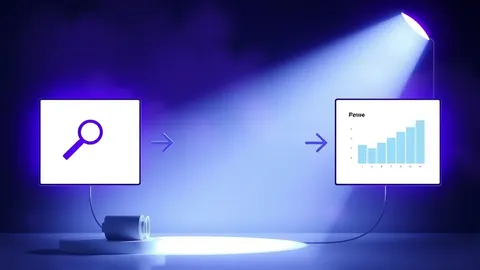
The intelligence cycle transforms raw data into actionable security decisions through a continuous loop of planning, collection, and analysis rather than a one-time report.

Filigran has confirmed the speaker lineup for its inaugural THREAD event, a free gathering in Paris on October 15 featuring experts from the FBI and major firms.

A drone attack on a Yandex facility in Russia caused massive fires and service disruptions, threatening AI supercomputers and cloud customer operations.

Sigma rules separate detection logic from platform syntax, allowing you to write once and deploy detection across multiple security tools without rewriting code.

Honeytokens act as silent tripwires within your data stores, triggering alerts when accessed by unauthorized accounts that bypass perimeter defenses.

Indicators of attack reveal active intrusions by detecting hostile behavior patterns rather than waiting for static file signatures to appear in your logs.

PowerShell is not inherently malicious, and blocking it entirely breaks legitimate administration while leaving advanced threats undetected by basic signature scanners.

SOAR systems do not just alert you to threats; they execute predefined playbooks to contain incidents before human analysts can review the data.

Most organizations collect logs but fail to normalize them, creating blind spots that attackers exploit to move laterally without triggering any automated alerts.

Most incident response failures occur because responders alter the very data they need to prove what happened, turning a recoverable incident into an unrecoverable liability.

Most failures occur because teams collect logs before defining the specific security events they intend to detect and respond to.

Most attackers reuse network components across campaigns, allowing you to trace a single suspicious link back to a broader operation before damage occurs.

You can validate your security controls without hiring a dedicated offensive team by using structured, hypothesis-driven testing cycles.

Malware uses mathematical formulas to create thousands of fake web addresses, making traditional blocklists useless against shifting command centers.

Most recovery efforts fail because responders restore data before verifying that the attacker has not planted persistence mechanisms inside the backup files.

Attackers use PowerShell not to install malware, but to hide their actions inside the operating system's own administrative language.