Medical Identity Theft Warning Signs and Response Steps
Medical identity theft often hides in billing discrepancies and denied claims that appear months after the initial data compromise, making early detection difficult.
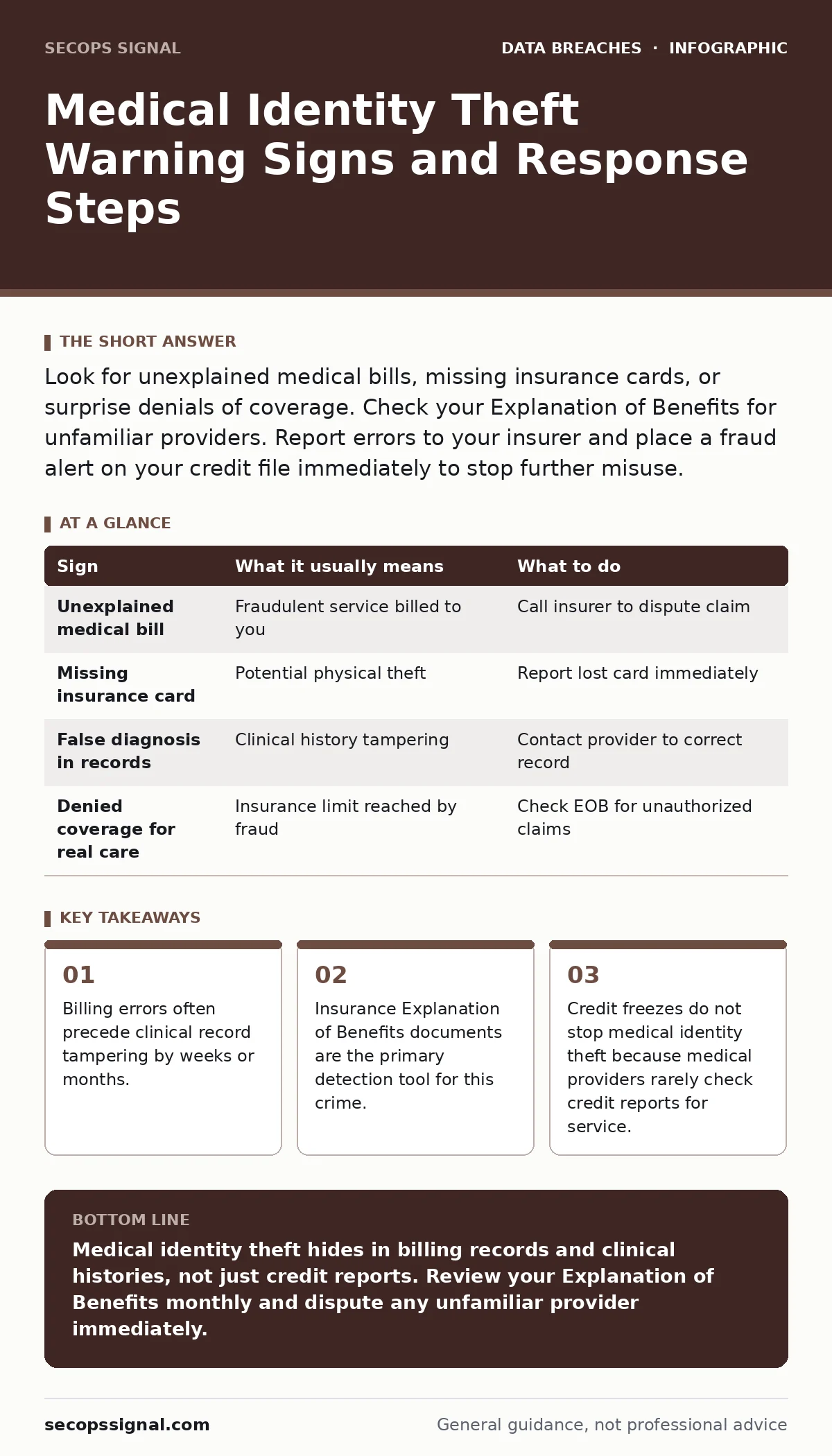
Look for unexplained medical bills, missing insurance cards, or surprise denials of coverage. Check your Explanation of Benefits for unfamiliar providers. Report errors to your insurer and place a fraud alert on your credit file immediately to stop further misuse.
Early Signs You Can See Immediately
You will notice medical identity theft first through financial discrepancies. These signs appear on your bank statements or insurance portals. A charge for a medical procedure you did not receive is the clearest indicator. This happens when thieves use your insurance details to bill for expensive services. You may also receive a letter from a collection agency for a debt you do not recognize. This debt often stems from services billed under your name but paid by another party.
Another early sign is the loss of your physical insurance card. Thieves need the policy number and group number to submit fraudulent claims. If you misplace this card, assume it is compromised. You must contact your insurer to report it missing. This action triggers a new card issuance and alerts the system to monitor for unusual activity. Do not wait for a bill to arrive.
Hidden Signs That Are Easy to Miss
The subtlest signs of medical identity theft appear in your clinical records. You might discover a diagnosis you do not have in your patient portal. This occurs when thieves add fake conditions to your history to justify their fraudulent claims. These false entries can persist for years. They may lead to dangerous medical errors if a real doctor relies on incorrect data during an emergency.
You should also review your Explanation of Benefits (EOB) documents. These statements detail what your insurance paid for and what you owe. They are sent for every claim processed, even if you did not pay out of pocket. Look for providers you have never visited. Look for dates when you were out of town. Discrepancies here indicate that someone is using your identity to receive care.
The Role of Sensitive Personal Data
Medical identity theft thrives on the exposure of sensitive personal data. This category includes your name, date of birth, and insurance policy number. Unlike financial data, this information rarely changes. Your date of birth stays the same forever. Your insurance provider often keeps the same policy number for years. This stability makes the data valuable to criminals.
Hackers target healthcare networks because they store this data in large, centralized databases. A single breach can expose millions of records. The theft often begins with credential exposure from a hospital staff member’s compromised login. Once inside, attackers can export patient lists. These lists are sold on underground markets. Understanding how data controllers and data processors handle this information helps you assess your risk.
Why Credit Freezes Are Not Enough
Many people believe that freezing their credit prevents identity theft. This belief is incorrect for medical crimes. Credit freezes stop new loans and credit cards from being opened. They do not stop the use of your Social Security number or insurance details. Medical providers do not check credit reports before treating a patient. They verify insurance eligibility instead.
This gap leaves you vulnerable. A thief can use your identity to get surgery or buy prescription drugs. These services are billed to your insurance, not your credit. You will not see a credit inquiry. You will only see the bill later. This is why monitoring your insurance statements is more effective than monitoring your credit report for this specific threat.
Immediate Steps to Contain the Damage
When you spot a sign, act within 24 hours. First, call your insurance provider. Report the fraudulent claim. Ask them to flag your account as compromised. This prevents further payments from being released. Second, contact the medical provider who billed the claim. Request that they remove the fraudulent entry from your record. This protects your clinical history from future errors.
Third, place a fraud alert on your credit reports. This is different from a freeze. It requires creditors to verify your identity before opening new accounts. While this does not stop medical theft, it helps if the thief tries to use your information for financial gain. Finally, file a report with the Federal Trade Commission. This creates an official record of the crime.
See also: Tax Identity Theft Myths: What Actually Protects Your Financial Data · Data Masking Best Practices to Protect Sensitive Records
Long-Term Monitoring and Prevention
You must monitor your records continuously. Set up automatic alerts for any new claims on your insurance account. Many insurers offer this feature in their mobile apps. Review your EOBs every month. Do not skip this step even if you have not seen a doctor. Small, fraudulent claims often go unnoticed until they accumulate.
Consider using a dedicated email address for medical communications. This separates your health data from your general inbox. It reduces the risk of phishing attacks targeting your medical accounts. Also, shred all paper medical bills and EOBs before disposing of them. Physical theft of these documents is a common vector for data harvesting.
| Sign | What it usually means | What to do |
|---|---|---|
| Unexplained medical bill | Fraudulent service billed to you | Call insurer to dispute claim |
| Missing insurance card | Potential physical theft | Report lost card immediately |
| False diagnosis in records | Clinical history tampering | Contact provider to correct record |
| Denied coverage for real care | Insurance limit reached by fraud | Check EOB for unauthorized claims |
Understanding Breach Dwell Time
The time between a data breach and its discovery is called breach dwell time. In healthcare, this period is often long. Hospitals may not realize their systems were compromised for months. During this time, attackers can exfiltrate patient data silently. You may not know your information was stolen until years later.
This delay complicates detection. You cannot monitor for a breach you do not know happened. This is why proactive monitoring of your own records is necessary. Do not rely on notifications from healthcare providers. They are often late or incomplete. Take ownership of your data security. Regular reviews of your insurance and clinical records are your best defense against the slow burn of medical identity theft.
Key takeaways
- Billing errors often precede clinical record tampering by weeks or months.
- Insurance Explanation of Benefits documents are the primary detection tool for this crime.
- Credit freezes do not stop medical identity theft because medical providers rarely check credit reports for service.
Medical identity theft hides in billing records and clinical histories, not just credit reports. Review your Explanation of Benefits monthly and dispute any unfamiliar provider immediately.
Frequently asked questions
How long does it take to detect medical identity theft?
Detection often takes months or years because victims rarely check their clinical records or insurance statements closely.
Does medical identity theft affect my credit score?
No, medical debts generally do not appear on consumer credit reports, but they can ruin your medical history and insurance standing.
Should I get a medical power of attorney?
Yes, this legal document ensures you control your health decisions and can correct records if you become incapacitated by fraud.
How is this different from tax identity theft?
Tax theft uses your Social Security number to file fraudulent returns, while medical theft uses your insurance details to bill for services.
How this guide was produced: written by the SecOps Signal editorial team with AI assistance, checked against the public references listed below, and reviewed when the facts change. See our editorial policy or report an error.