Data Extortion Warning Signs: Spotting the Threat Before Paying
Attackers often exfiltrate data silently before launching ransomware, meaning early detection relies on spotting unusual outbound traffic rather than waiting for an encryption notice.

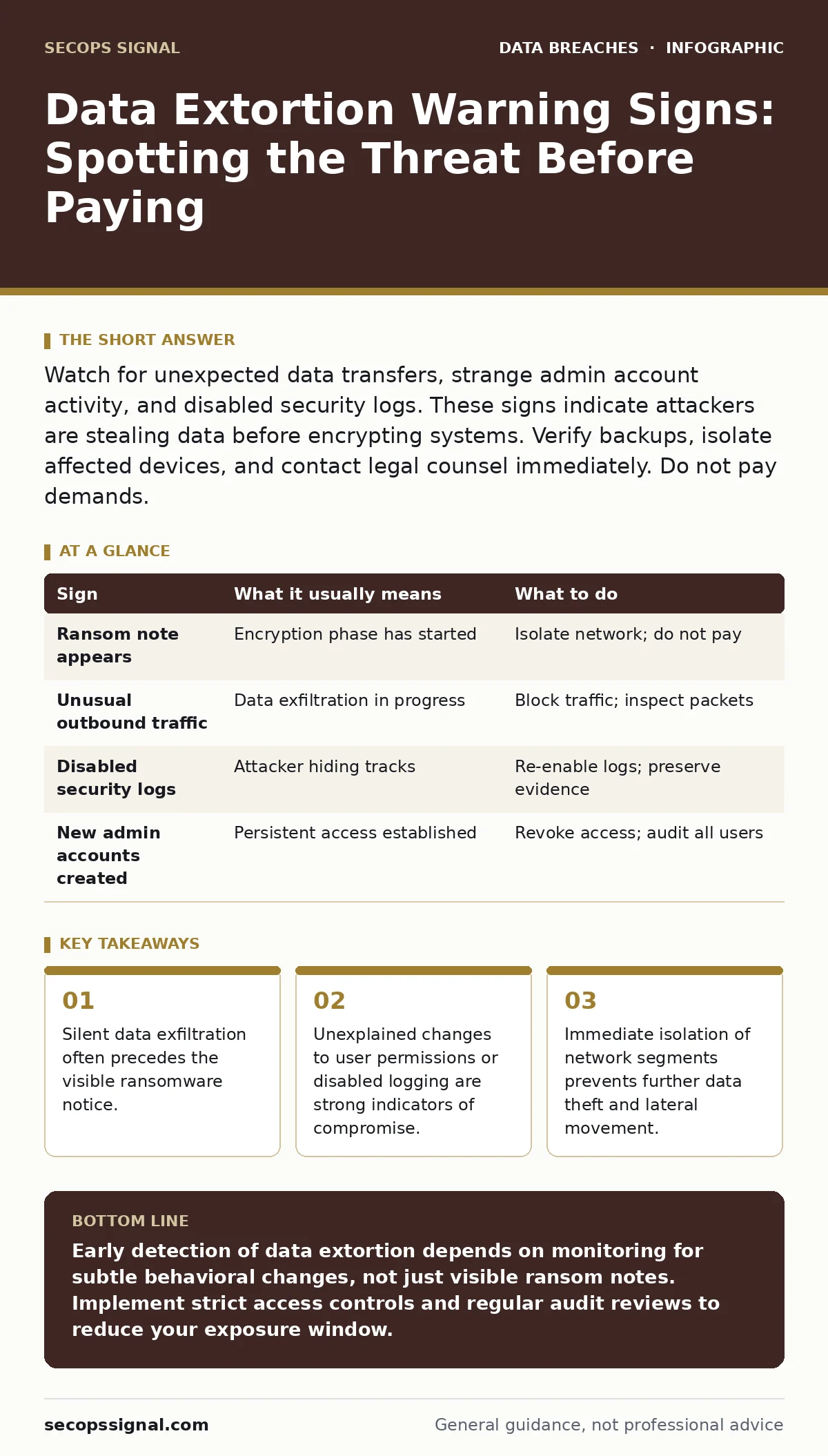
Watch for unexpected data transfers, strange admin account activity, and disabled security logs. These signs indicate attackers are stealing data before encrypting systems. Verify backups, isolate affected devices, and contact legal counsel immediately. Do not pay demands.
The Double Extortion Mechanism
Modern data extortion rarely begins with a demand. Instead, attackers first breach the network to steal sensitive information. They sit in the shadows, copying data to external servers. Only after confirming they hold leverage do they encrypt the files or threaten a public release. This method creates two points of pressure: operational disruption and reputational damage. You face a choice between paying to stop the leak or suffering the breach. Understanding this timeline is the first step in defense. The window for containment exists before the threat letter arrives.
Immediate Warning Signs
The most obvious signs appear when the attacker decides to act. You will see ransom notes on desktops or in email inboxes. These messages demand payment in cryptocurrency and threaten to publish stolen data. Network performance degrades sharply as encryption processes consume resources. Files become inaccessible or change extensions unexpectedly. These symptoms confirm the attack is active. However, waiting for these signs means the data is already gone. The damage is done before you read the demand. Your focus must shift to containment rather than prevention at this stage.
Subtle Indicators of Data Theft
Signs that are easy to miss occur during the preparation phase. Attackers need time to map your network and locate valuable assets. They create hidden accounts or elevate privileges to access deeper systems. You might notice unusual login times from unexpected geographic locations. Standard administrative tasks may fail due to changed permissions. These actions are deliberate efforts to maintain access. They prepare the ground for the extortion phase. Monitoring for these anomalies requires consistent baseline tracking. Deviations from normal user behavior often signal an intruder.
Operational Anomalies
Network behavior changes before data leaves the building. Unusual outbound traffic volumes can indicate data exfiltration. Large files moving to unknown IP addresses are a red flag. You might see spikes in bandwidth usage during non-business hours. Firewalls may log connections to newly registered domains. These connections serve as command-and-control channels. They allow attackers to retrieve stolen data without triggering simple keyword alerts. Packet inspection can reveal these patterns. Integrating this visibility into your database security strategy helps catch the transfer early.
Security Control Manipulation
Attackers disable defenses to operate freely. You may find antivirus software turned off on critical servers. Firewall rules might be modified to allow unrestricted outbound traffic. Logging services could be paused to erase their tracks. These changes are deliberate and dangerous. They leave your systems blind to further intrusion. If you cannot see what is happening, you cannot stop it. Regular integrity checks of security configurations are necessary. Re-enable any disabled controls immediately upon detection. This limits the attacker's dwell time within your environment.
Incident Response Steps
When you spot a sign, act quickly to limit damage. Disconnect the affected systems from the network immediately. This stops further data exfiltration and lateral movement. Preserve evidence by taking snapshots of memory and disk states. Do not reboot machines, as this destroys volatile data. Contact your legal counsel to understand notification obligations. Engage a professional incident response team if available. Communicate with your employees to prevent panic. Do not delete logs or files until the investigation is complete. Your credential exposure management plan should inform how you reset access.
| Sign | What it usually means | What to do |
|---|---|---|
| Ransom note appears | Encryption phase has started | Isolate network; do not pay |
| Unusual outbound traffic | Data exfiltration in progress | Block traffic; inspect packets |
| Disabled security logs | Attacker hiding tracks | Re-enable logs; preserve evidence |
| New admin accounts created | Persistent access established | Revoke access; audit all users |
Preventing Future Extortion
Defense relies on reducing the attacker's options. Implement strict user access provisioning policies to limit unnecessary privileges. Ensure data controllers and data processors understand their roles in protection. Regular backups stored offline provide a recovery path. Test these backups frequently to ensure they work.
Security frameworks like SOC 2 offer structured approaches to risk management. Address account takeover fraud risks by enforcing multi-factor authentication. Consider data masking for sensitive records to reduce value. Mitigate tax identity theft risks by securing personal financial data. A layered approach makes extortion less viable for attackers.
Key takeaways
- Silent data exfiltration often precedes the visible ransomware notice.
- Unexplained changes to user permissions or disabled logging are strong indicators of compromise.
- Immediate isolation of network segments prevents further data theft and lateral movement.
Early detection of data extortion depends on monitoring for subtle behavioral changes, not just visible ransom notes. Implement strict access controls and regular audit reviews to reduce your exposure window.
Frequently asked questions
How can I tell if my data has already been stolen?
You cannot be certain without forensic analysis. Look for large outbound data transfers, new unknown files, or connections to suspicious IP addresses.
Should I pay the ransom to stop the data leak?
No. Payment does not guarantee the attacker will delete the data. It also funds further criminal activity and may attract future attacks.
What is the first step after finding a ransom note?
Immediately disconnect the affected systems from the network to prevent spread. Preserve all evidence for investigation and legal review.
How do I prevent attackers from exfiltrating data silently?
Use network monitoring tools to detect unusual outbound traffic. Enforce strict access controls and regularly audit user permissions and logs.
How this guide was produced: written by the SecOps Signal editorial team with AI assistance, checked against the public references listed below, and reviewed when the facts change. See our editorial policy or report an error.